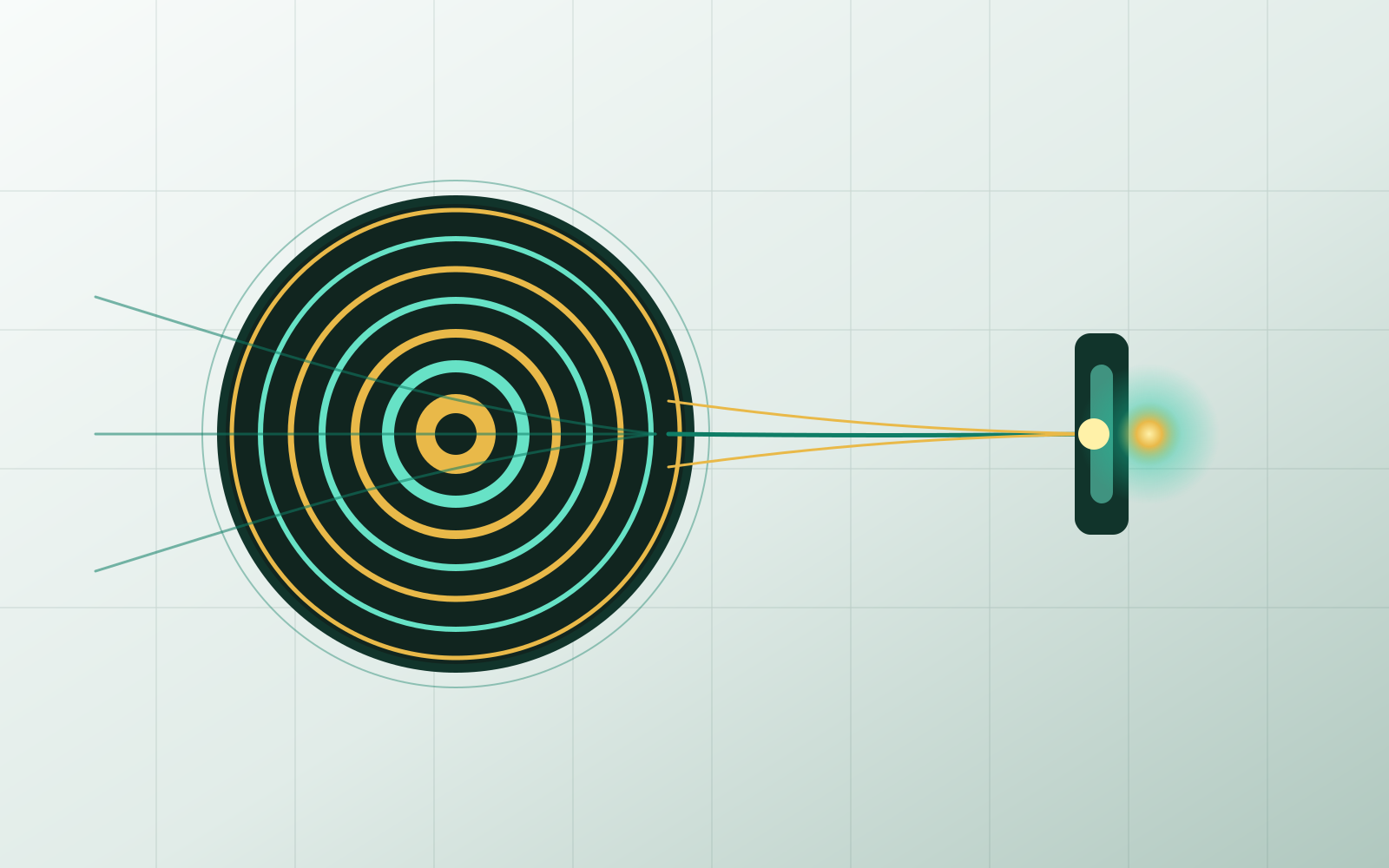

Why counting individual photons changes the measurement
Traditional imaging integrates charge over an exposure window. That approach is robust, but it can hide weak events inside read noise, dark current, or broad intensity averages. Single-photon counting pixel detectors treat each interaction as a discrete event, giving teams a cleaner way to separate signal from background.
For material analysis, non-destructive testing, spectral radiography, and radiation monitoring, the result is not only a sharper image. It is a richer measurement: thresholded counts, energy windows, and event timing can all become part of the workflow.
Where it fits best
- Low-dose X-ray and gamma-ray imaging where sensitivity matters.
- Energy-selective measurements that benefit from photon discrimination.
- Research workflows that need repeatable evidence from weak or sparse signals.
When the signal is scarce, counting is often more informative than averaging.